
What GRP sandwich panels are
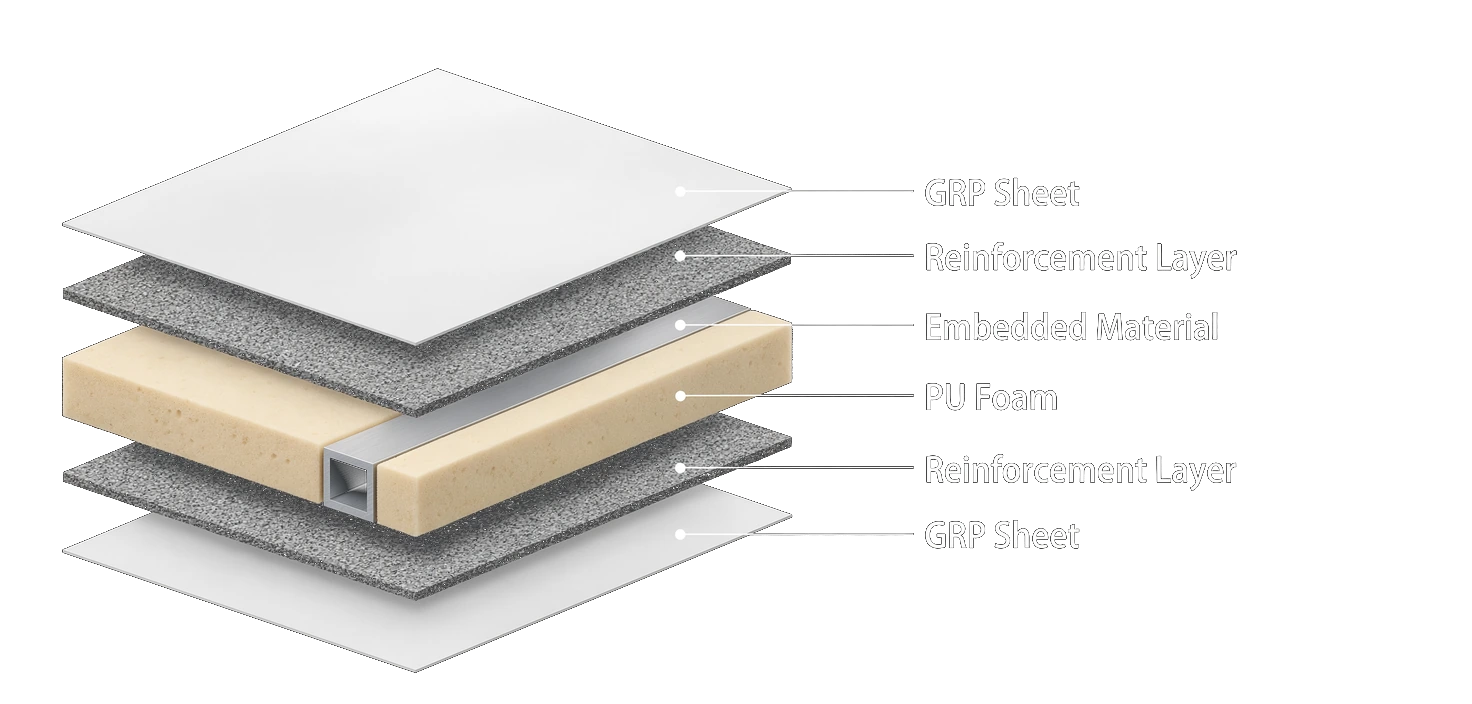
GRP stands for glass-reinforced plastic: layers of fiberglass reinforcement set in resin, bonded into a sandwich panel. The “sandwich” structure — rigid outer skins with a core between them — gives the panel stiffness without a lot of weight. Our dry freight panels are 30 mm thick with internal reinforcements built in for extra rigidity where the body needs it.
Practical reasons fleets choose them
They handle daily abuse
Delivery work is rough on bodies — pallets shift, dollies bang into walls, forklifts clip door frames. GRP panels stand up to the knocks and scrapes of multi-stop routes, and localized damage is generally repairable without replacing whole wall sections.
They keep weight in check
A lighter body leaves more capacity for payload. Our 10 ft dry freight bodies start at approximately 780 kg, and even the 20 ft bodies come in around 1,700 kg — practical numbers for commercial chassis where every kilogram of payload earns its keep.
They deal with BC weather
Rain, road spray, freeze-thaw cycles — GRP doesn’t rust. Paired with a galvanized bolted sub-frame and a powder-coated stainless-steel rear door frame, the body is built to resist corrosion in the conditions Lower Mainland and Fraser Valley trucks actually work in.
They’re straightforward to maintain
GRP surfaces wash down easily and don’t need repainting to stay presentable. For fleet operators running branded liveries or plain white boxes, that means less downtime in the paint shop.
How we build with them
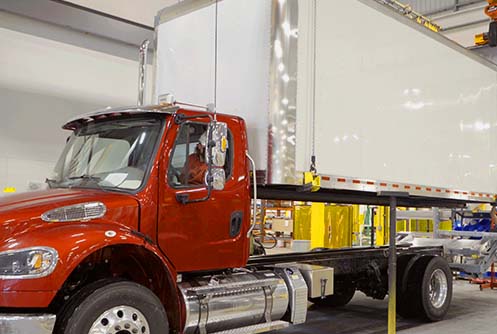
Panels are only part of the story. Our dry freight bodies pair the 30 mm GRP sandwich walls with a 3/4-inch marine plywood floor topped with an anti-slip GRP layer — a working surface that stands up to pallet jacks and wet boots. The roll-up rear door keeps the back opening simple and reliable for high-cycle delivery work, and motion-sensor LED interior lighting plus DOT-approved exterior lighting round out the package.
Repairability matters more than you think
No body stays pristine forever, so how it repairs matters. With GRP panel construction, localized damage — a cracked corner from a loading dock, a puncture from a shifted pallet — can typically be repaired in sections rather than requiring full wall replacement. That keeps repair bills smaller and trucks earning instead of sitting in a shop. It’s one of the reasons we also service bodies built by other manufacturers: panel repairs, floor work, and door replacements are straightforward when the construction is practical to begin with.
What GRP doesn’t do
Honest note: GRP panels aren’t structural in the way a steel frame is, which is why our bodies pair them with internal reinforcements and a galvanized bolted sub-frame underneath. The panels handle the enclosure — weather, impact, appearance — while the sub-frame carries the structural load to the chassis. It’s a division of labour that plays to each material’s strengths.
The bottom line
There’s no single perfect body material — but for general freight in this region, GRP sandwich panels hit the practical middle: tough enough for daily delivery work, light enough to protect payload, and resistant to the weather and corrosion that age a truck body before its time.
If you’re speccing a dry freight body in BC, talk to the people who build them. Evermount Truck Solutions manufactures GRP dry freight bodies from 10 to 20 ft in Abbotsford, BC. Call sales at +1 (250) 885-9335 or email sales@evermount.ca.