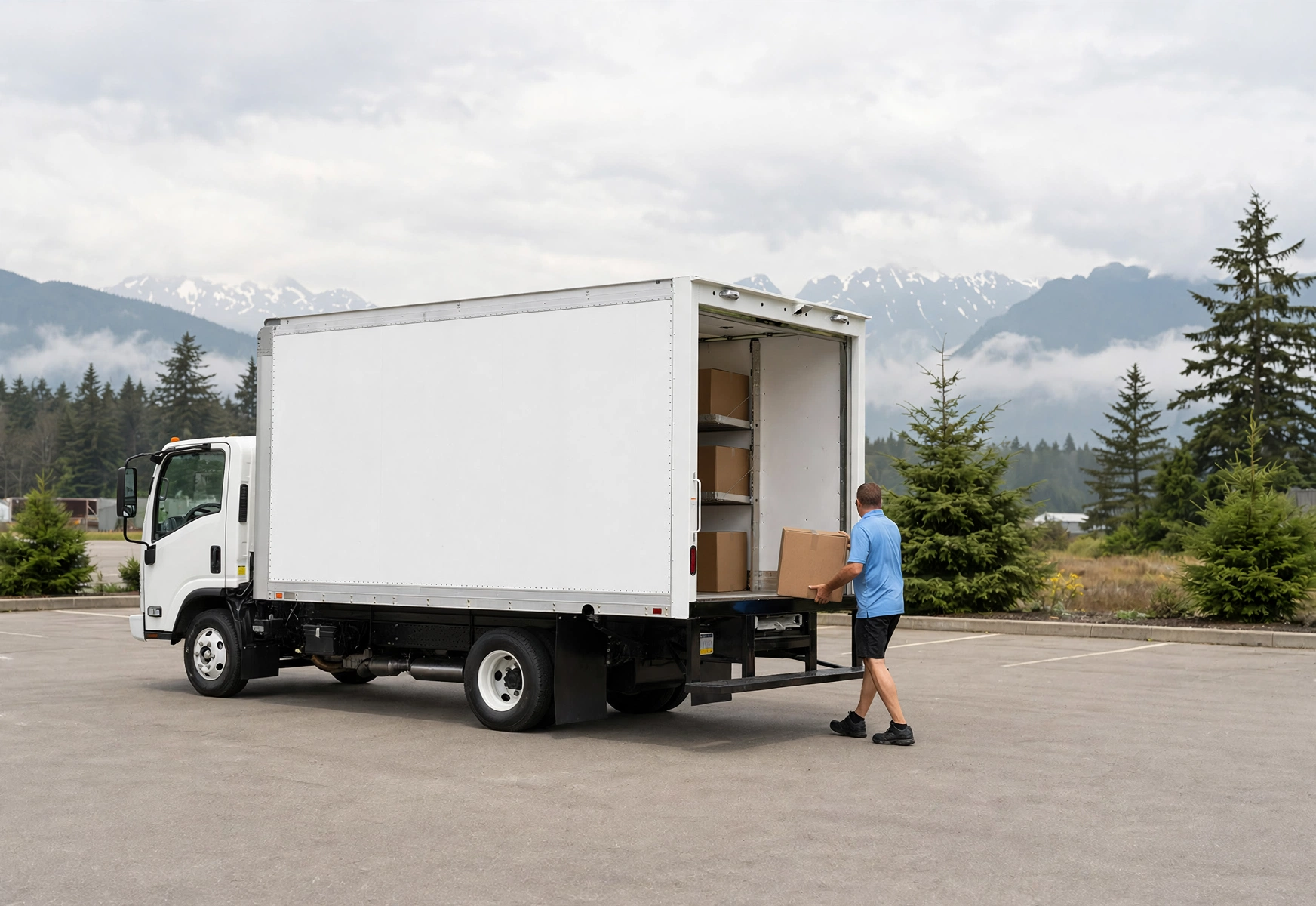

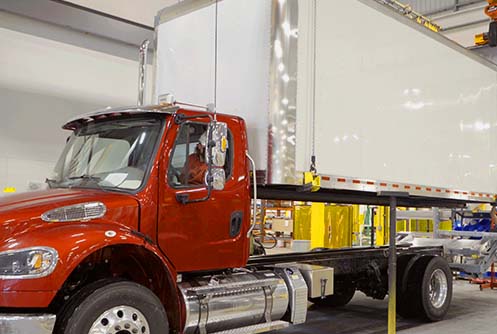
A truck body is a working asset — and like any asset, it lasts longer when it’s looked after. Whether you run one truck or a fleet, these five practical habits will help you get more years out of your dry freight or refrigerated body. None of them require special tools or training — just consistency.
1. Wash it regularly — especially underneath
Road salt, de-icer, mud, and grime accelerate corrosion on sub-frames, door hardware, and hinges. A regular wash, including the underbody and wheel areas, is the cheapest life-extension you can buy. If your reefer has a floor drain, use it: washouts keep the XPS insulated floor with aluminum chequered plate clean and prevent residue from working into seams.
2. Inspect door seals and hardware on a schedule
Roll-up doors cycle hundreds of times a week on delivery routes. Check rollers, cables, springs, and seals for wear before they fail — a door that sticks or won’t latch properly costs you time at every stop and can compromise cargo security. Worn seals on a refrigerated body also let warm air in, making the refrigeration unit work harder. If components are worn, get them serviced or replaced promptly; roll-up door component service is routine work for a truck body shop.
3. Keep the floor sound
The floor takes the worst beating of any part of the body — pallets, dollies, forklifts, and moisture all attack it. Watch for soft spots, delamination, or damaged anti-slip surfacing on dry freight floors, and check reefer floors around the drain for standing water or corrosion. Catching floor damage early usually means a repair; ignoring it can mean a full floor replacement.
4. Check lighting and electrical
Walk around the truck and check every light: interior cargo lighting, brake lights, turn signals, and marker lights. DOT-approved exterior lighting is a compliance matter as well as a safety one — a burned-out marker light can earn you an inspection you didn’t want. Motion-sensor LED interior lights should trigger reliably; if they don’t, it’s usually a quick fix.
5. Address small damage before it spreads
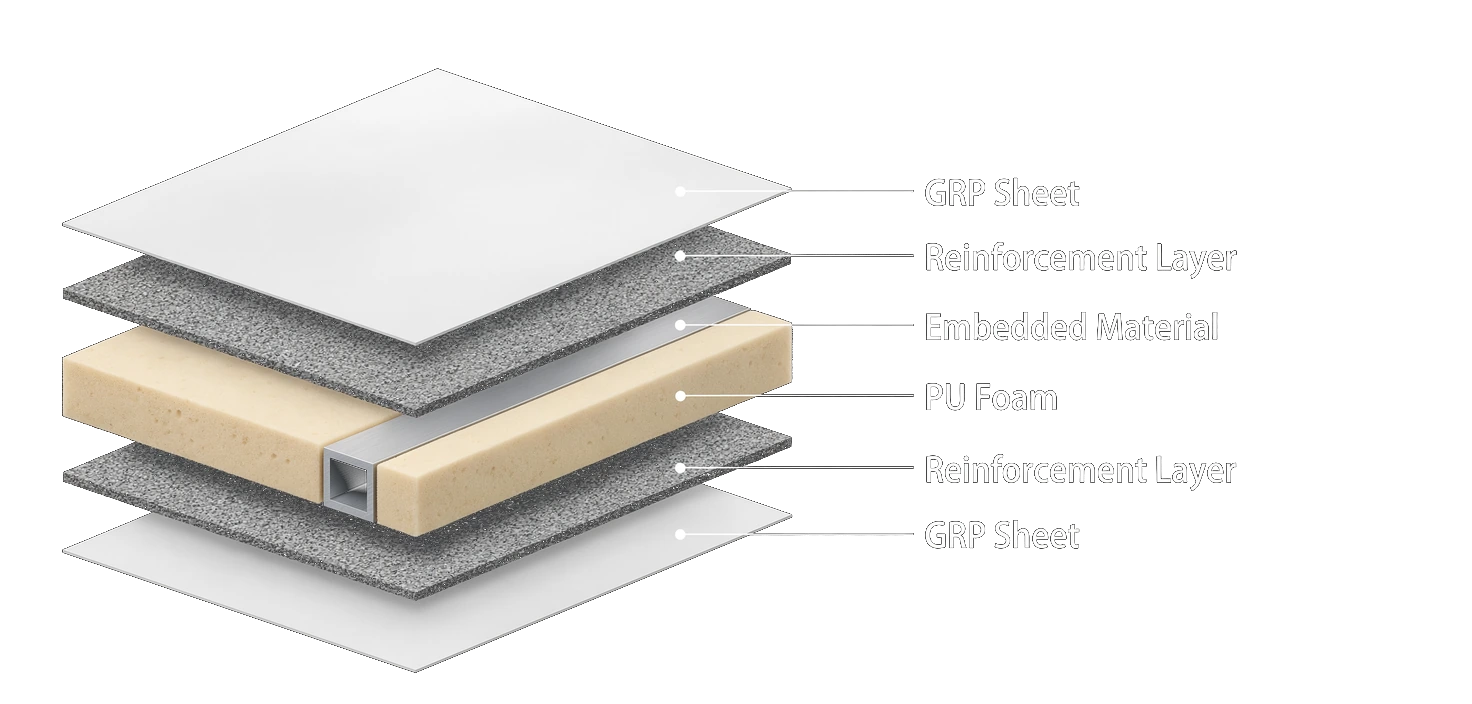
A cracked panel, a bent bumper step, a torn mud flap — small issues become structural ones when water gets in and winter does its work. GRP panels are generally repairable in sections, and wall, roof, and interior repairs are straightforward when caught early. The rule of thumb: if you can see damage, water can get in. Fix it before the next rainy season.
Bonus habit: keep a simple maintenance log
It doesn’t need to be fancy — a notebook or a spreadsheet per truck noting wash dates, door adjustments, bulb replacements, and repairs. Over a year, patterns emerge: the trailer that eats door rollers every six months, the unit whose seals always fail first. That log tells you which trucks need attention before they break down on route, and it helps any shop you bring the truck to diagnose faster.
When to call a professional
Some maintenance is a driver-level habit; some belongs in a shop. If you’re seeing door mechanisms binding, floor softness, panel damage, or seal failure, bring the truck in — these are exactly the repairs truck body service shops handle every day, including bodies built by other manufacturers.
Evermount Truck Solutions offers truck body repair and service in Abbotsford, BC — roll-up doors, liftgates, reefer-body panels, insulation, doors and seals, and floor, wall, and roof repairs — serving the Fraser Valley, Lower Mainland, and across BC. Call our office at +1 (250) 884-4437 or email sales@evermount.ca to book an assessment.