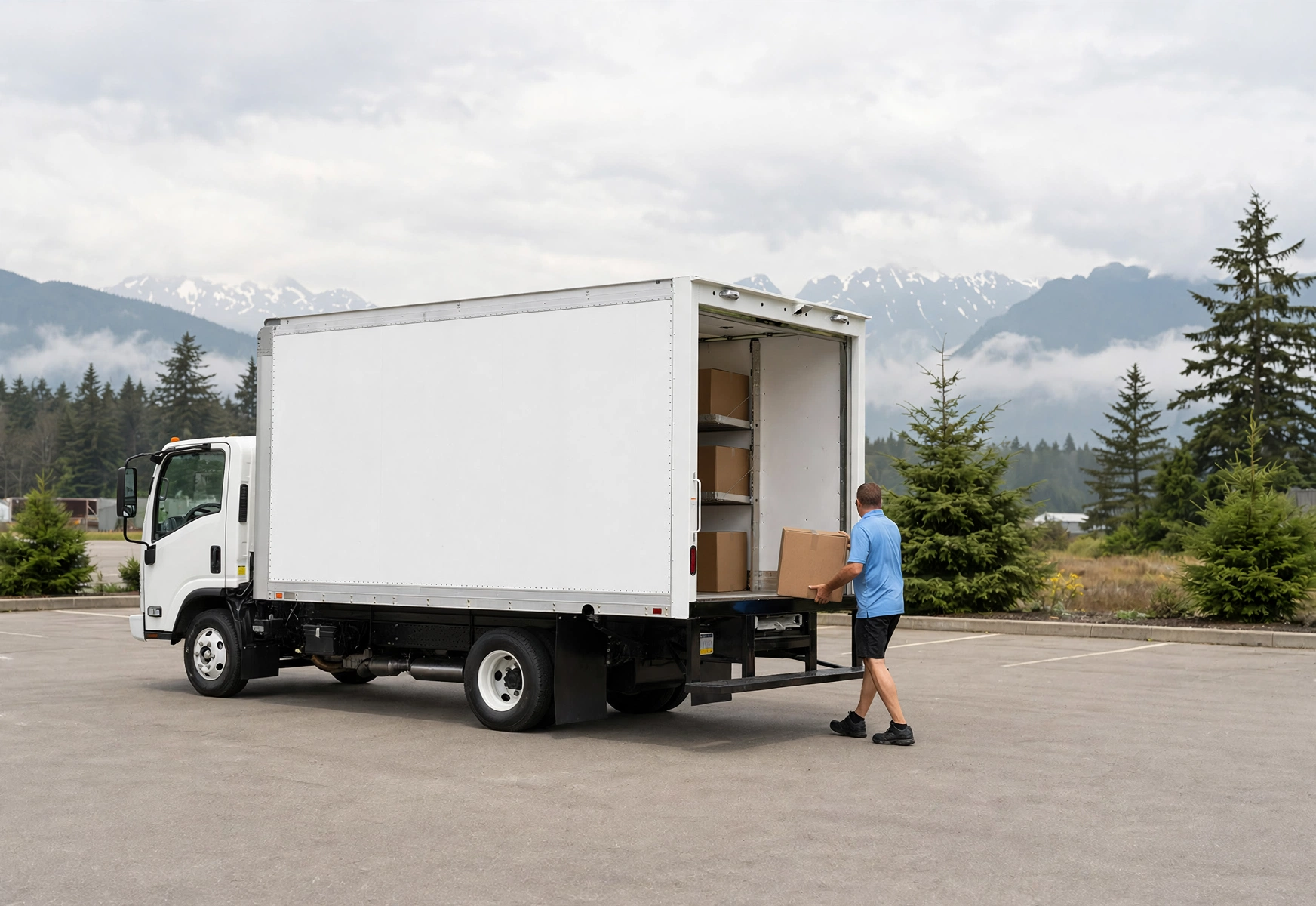

Winter in BC is not one kind of cold. A truck running the Fraser Valley deals with rain, slush, and overnight frost. The same truck heading to the Interior or over a mountain pass can hit real snow, road salt, and temperatures that stay below freezing all day. Your truck body has to handle both, and the work you do in October and November decides whether it does.
Here is a practical winter checklist for dry freight and refrigerated bodies - the things worth checking before the first freeze, not after it.
Start with the rear door
The rear door is where winter problems show up first. On a roll-up door, water gets into the tracks during the day and freezes overnight. A door that ran fine in September can stick or refuse to close in January. Clean the tracks out, check the curtain for cuts, and look at the bottom latch bar - if it is bent or worn, it will not seat properly when ice is in the way.
On refrigerated bodies, the insulated roll-up door and its seal do real work in winter too. Cold air leaking around a tired seal makes the refrigeration unit work harder and costs fuel. Check the seal around the powder-coated stainless-steel rear door frame and replace anything cracked or compressed before the cold sets in.
Check the floor and the drain
Wet freight, melting snow off pallets, and slush tracked in by boots all end up on the floor. On a dry freight body, the marine plywood floor with its anti-slip GRP top layer is built for that - but standing water is still the enemy. Make sure water can run out rather than pool, and check for soft spots or damaged sections where moisture has been sitting.
On a refrigerated body, the floor drain earns its keep in winter. Make sure it is clear and flowing. A blocked drain turns a reefer floor into an ice rink, and a frozen drain is much harder to clear once temperatures drop.
Look underneath: the sub-frame and hardware
Road salt and de-icing chemicals are hard on everything under a truck body. Evermount builds dry freight bodies on a galvanized bolted sub-frame, which gives the steel a fighting chance against corrosion - but galvanizing is protection, not immunity. Get underneath before winter and look for chips, scrapes, and rust starting at bolt points and brackets. Touch up what you find now, while you can still work on it comfortably.
While you are under there, check the chequered-aluminum rear bumper and step, the mud flaps, and the exterior lighting. DOT-approved exterior lighting matters more in winter, when daylight is short and visibility is poor.
Protect the cargo, not just the box
Winter freight shifts more. Wet cardboard, icy pallets, and loads that settle as they thaw all move around in the box. This is the season to actually use the E-track in your dry box - strap the load, check the fittings, and replace any worn straps or damaged anchor points before they fail on a mountain road. Cargo control is cheap insurance against a damaged load and a damaged interior.
Inside the box, the motion-sensor LED lighting is worth a check too. Short winter days mean more loading in the dark, and a driver working by a dead light is a driver who misses a damaged pallet or a loose strap.
Plan for freeze-thaw, not just cold
The hardest part of a BC winter is not the coldest day - it is the freeze-thaw cycle. Water gets into small gaps during a mild afternoon, freezes overnight, and expands. That cycle works on panel joints, door seals, and floor edges all winter long.
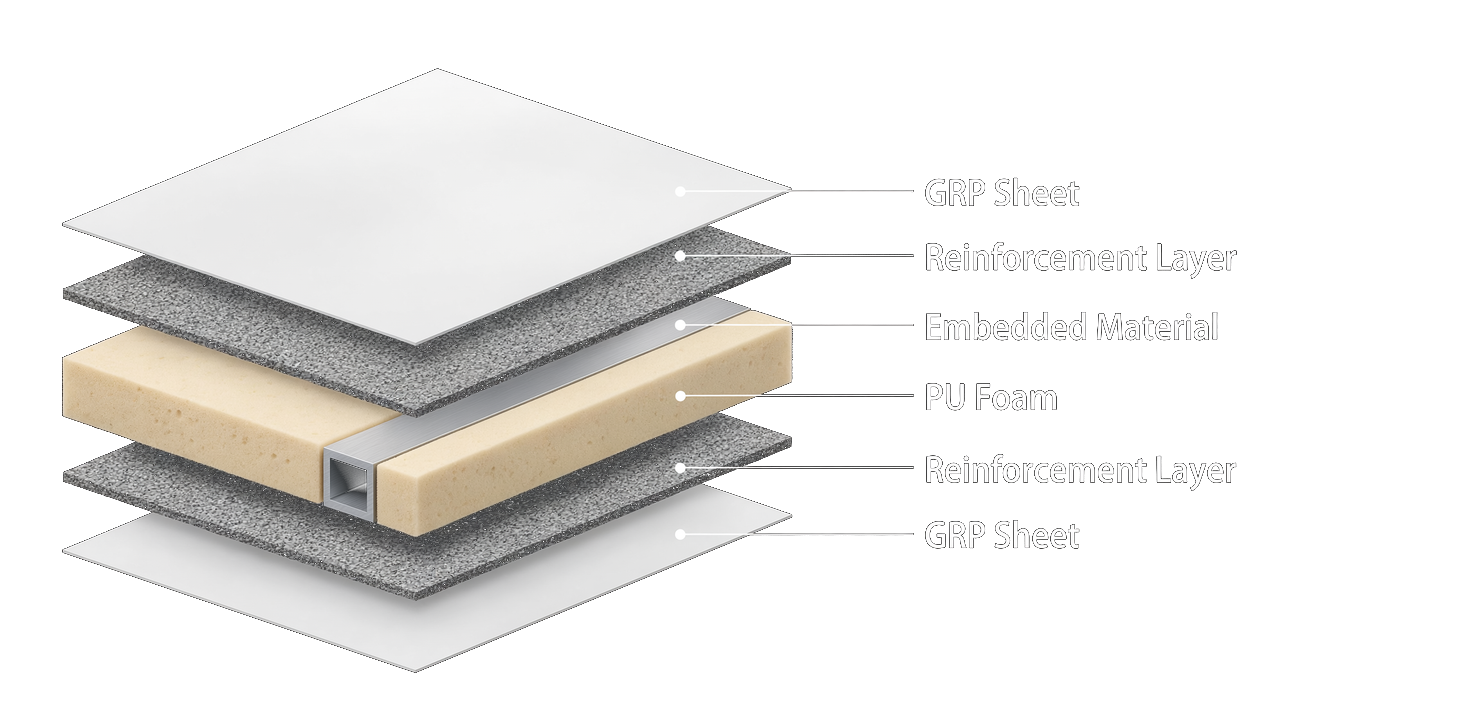
For refrigerated bodies, the swing is a different problem: the body has to hold temperature while the outside air goes from plus five to minus ten and back. That is what the 100 mm PU foam walls and 120 mm floor and roof are for, but insulation only works if the shell is intact. Walk the body and look for damaged panels, cracked seals, and anything that lets air through where it should not go.
Book the work before the rush
Every fleet in BC thinks about winter at the same time: the first cold snap. If your body needs door work, floor repairs, panel work, or lighting sorted out, getting it done in the fall beats queuing for it in January. A pre-winter inspection catches the small stuff - a sticking door, a blocked drain, a worn seal - while it is still small.
If your truck body needs attention before winter, our repair and service shop in Abbotsford handles roll-up door components, liftgates, reefer-body panels and doors, floors, walls, and interiors - including bodies built by other manufacturers. Call our office at +1 (250) 884-4437 or email sales@evermount.ca to book a pre-winter inspection.
Winter will find the weak points in a truck body. Finding them yourself first is cheaper, faster, and a lot less stressful than finding them on the side of the highway in a snowstorm.